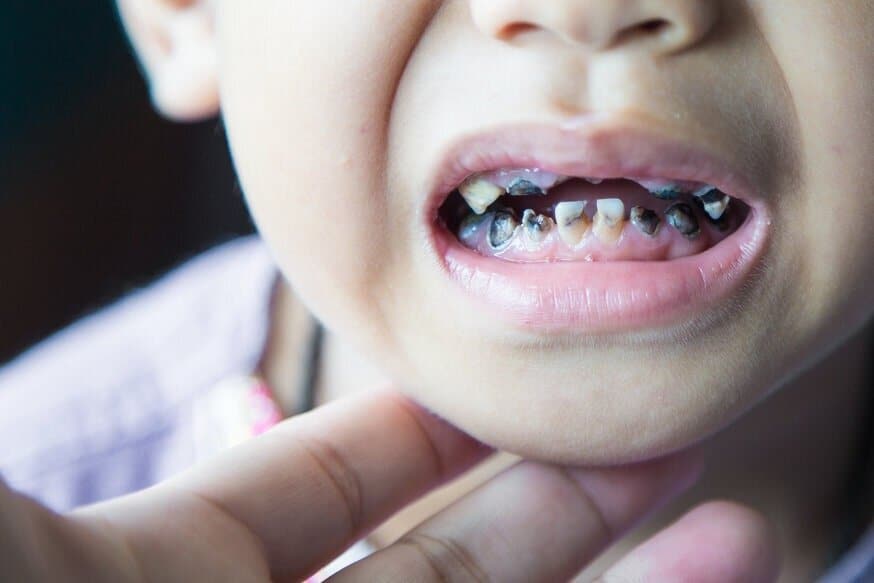
Here’s something that surprises parents when they first hear it: cavities are the most common chronic disease in children in the United States, more common than asthma. And yet most cavities are preventable. The gap between how common they are and how preventable they are comes down almost entirely to daily habits and to whether those habits are established early enough.
This isn’t about perfect dental hygiene from birth. It’s about building a routine that works, understanding why each part of it matters, and knowing what to do when the routine breaks down.
The Biology Behind Childhood Cavities
Decay doesn’t happen instantly. It’s a process that unfolds over time when the bacteria in the mouth, primarily Streptococcus mutans, feed on sugar and produce acid. That acid erodes the mineral structure of the enamel gradually. When the erosion outpaces the enamel’s ability to remineralize through saliva and fluoride, a cavity forms.
Children are at higher risk than adults for a few reasons. Their enamel is thinner and less mineralized than adult enamel. Their diets often include more frequent sugar exposure, from snacks, juice, and flavoured drinks. Their brushing technique is less effective, and they often can’t floss without help. And their primary teeth, despite eventually falling out, matter significantly: early decay can affect the developing permanent teeth below and affect the spacing of the adult dentition.
Fluoride: The Single Most Evidence-Backed Prevention Tool
Fluoride strengthens enamel and makes it more resistant to acid attack. It also has a mild antibacterial effect. The research on fluoride and cavity prevention in children is extensive and consistent.
Fluoride use in children starts earlier than most parents expect. A rice-grain-sized smear of fluoride toothpaste is appropriate from the first tooth. This increases to a pea-sized amount around age three. Many parents use fluoride-free toothpaste out of concern about swallowing, but the amount of fluoride in a pea-sized application is within safe limits even if some is swallowed.
Professional fluoride treatments applied at dental appointments provide an additional protective layer, particularly for children at higher cavity risk. These treatments use a higher concentration of fluoride than toothpaste and are applied in a gel or varnish form. The dentist will advise on whether and how often fluoride treatment is appropriate based on the child’s individual risk profile.
Brushing: Technique and Timing Matter More Than Products
Twice daily brushing with a soft-bristled toothbrush removes plaque before it hardens into tartar and before the bacteria in it have time to produce significant acid. The timing of the evening brush is particularly important: saliva flow decreases during sleep, which reduces the natural buffering and cleaning that saliva provides during waking hours. Any plaque left on the teeth before bed sits against the enamel in a low-saliva environment through the night.
Children under seven or eight typically don’t have the dexterity to brush effectively on their own. Parents should check and help with brushing, particularly at night, until the child can demonstrate consistent technique independently. A common error is assuming that because the child brushed, the brushing was effective. Spot-checking with a disclosing tablet once a week, which stains plaque a visible colour, can show exactly which areas are being missed.
Diet: Frequency Matters as Much as Quantity
The total amount of sugar consumed matters less than how often sugar contacts the teeth. Each time a child eats or drinks something sugary or starchy, the bacteria in the mouth produce acid for roughly 20 to 30 minutes afterward. If a child has juice with breakfast, a snack at mid-morning, another sweet drink at lunch, and grazes on crackers throughout the afternoon, the teeth are under acid attack for most of the day.
Consolidating sugar consumption into mealtimes rather than spreading it across continuous snacking dramatically reduces the number of acid cycles per day. Water between meals is the practical alternative to juice or flavoured drinks. For children who take a bottle to bed, milk and juice both contain sugars that pool against the teeth during sleep. Water is the appropriate bottle content at bedtime if a bottle is used at all.
At Wedgewood Dental in Rolla, the pediatric dentistry team discusses diet alongside hygiene at children’s appointments. Dr. Westmoreland’s practice works with families to build prevention into the child’s routine rather than managing decay after it develops.
Sealants: A Targeted Protective Measure
Dental sealants are a thin resin coating applied to the chewing surfaces of the back teeth, particularly the first and second permanent molars when they erupt. The grooves on these surfaces are naturally deep and narrow, making them difficult to clean with a toothbrush and disproportionately likely to develop cavities.
Sealants fill these grooves and smooth out the surface, making it much easier to brush effectively and significantly reducing the likelihood of decay in those specific areas. The application takes a few minutes per tooth and requires no drilling or numbing. For children with deep molar grooves or a history of cavities, sealants are one of the most practical preventive tools available.
When to Start and How Often to Visit
The first dental visit should happen around the time the first tooth appears, or by age one at the latest. Establishing a dental home early serves two purposes: it allows the dentist to monitor development and catch problems early, and it normalizes the dental visit for the child before there’s any procedure involved.
After the first visit, the standard recommendation is every six months, though children with higher cavity risk may need more frequent appointments. Wedgewood Dental sees children at the pediatric dentistry level alongside general family care, and if a cavity does develop, porcelain fillings are available to restore the tooth with a tooth-colored material.
Your Rolla Family Dentist Is Accepting New Patients
Wedgewood Dental welcomes children and families at both locations. The Rolla office at 713 Salem Avenue, Suite A is open Monday, Wednesday, and Thursday. The Salem office at 1116 S. Main Street is open Tuesday and Friday. New patients without insurance can book through the $89 new patient special, which includes an exam and images.
Rolla: (573) 368-7325 | Salem: (573) 729-7701
Insurance accepted: Delta Dental, Aetna, Cigna, Humana, MetLife, Guardian, and more